
Planter Gardening: Tips & Care
Link to the full Tips + Care PDF Pamphlet here.
Getting Started With Planter Gardening
So, you have your new Atlas Pots planter. How exciting! Choosing high-quality outdoor planters is an investment in both design and durability. Proper planter care and maintenance will help extend the lifespan of our lightweight fiberglass planters, prevent weather-related damage, and ensure optimal drainage for healthy plant growth.
Whether you’re placing one of our planters on a deck, patio, balcony, or commercial space, understanding seasonal care, cleaning methods, and drainage best practices is essential—especially in Canada’s varying climate conditions!
This guide outlines practical tips for maintaining outdoor planters year-round, including material-specific care, drainage considerations, plant size considerations, moving tips, and cleaning recommendations:
- Getting Started With Planter Gardening
- How to Care for Fiberglass & Composite Planters
- Planter Drainage & Water Management
- The Importance of Proper Plant Size
- Moving Your Planter Safely
- Cleaning Your Planter
- Final Tips for Long-Term Planter Performance
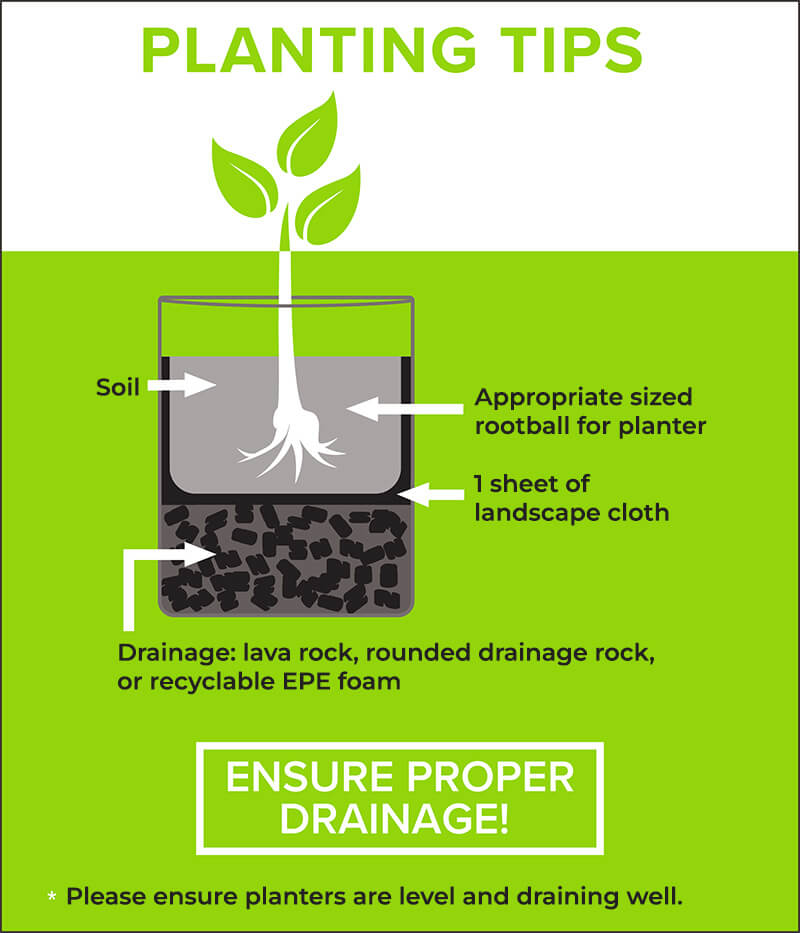
For a summarized visual of the key points, refer to the image below that we’ve created for your convenience:
Be sure to remove all packaging (shrink-wrap + cardboard) when leaving planters outside. Shrink-wrapped planters can damage the finish, stick to the planters, or melt onto the planters.
If you are waiting to plant up your planters, store planters in a dry, protected area. Do not leave planters outside still wrapped in bubble-wrap and shrink-wrap.
How to Care for Fiberglass Planters
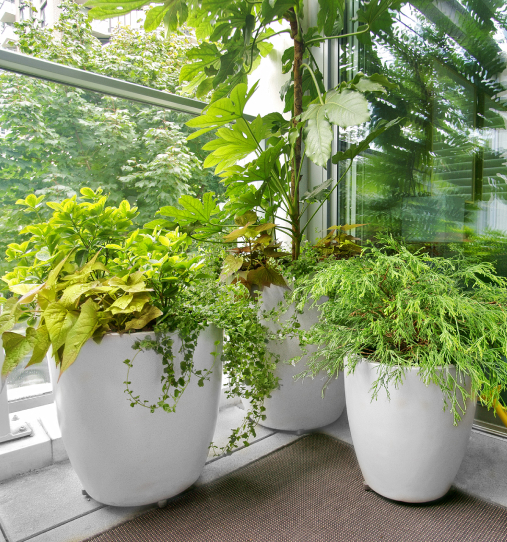
Here’s how to handle fiberglass planters to prevent damage. Planters made with these materials are durable and lightweight, but they require proper support and careful handling to maintain their structural integrity. These planters are made in three sections (the bottom, walls, and the top) and uneven placement or improper transport can compromise their framework over time.
To protect your planter:
- Place on an even surface. Ensure the entire periphery of the bottom of the planter is supported. Failure to do so will result in compromising the framework and integrity of the planter.
- Avoid dragging or pushing when filled. The weight of soil and plant material is substantial, and a full planter that is pulled, pushed, or tugged will produce damage. If moving a planter—especially a large planter—consider emptying it prior to moving.
- Use dollies for frequent movement. If planters will be moved often, consider placing dollies prior to planting (see below, under ‘using dollies’).
Proper weight distribution is essential to prevent structural stress and maintain long-term durability, particularly for large outdoor planters.
Planter Drainage & Water Management
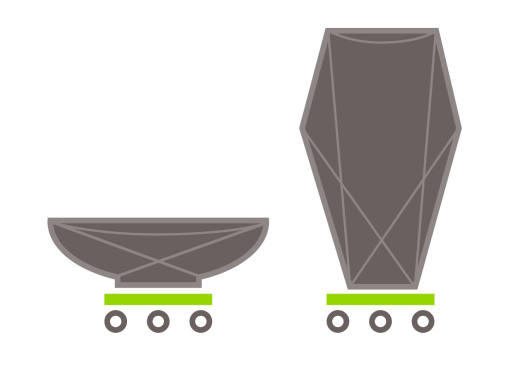
How do you ensure proper drainage in an outdoor planter? Proper drainage is essential to prevent water buildup, structural stress, and root damage. Your outdoor planter should be elevated, supported evenly, and layered correctly to allow water to fully vacate the container after watering or rainfall.
Elevating the Planter
When it comes to elevating your planter, these are some considerations for planter feet:
- Many planters come with built-in feet to elevate them slightly off the ground. Otherwise, using ‘pot toes’ or 1″ tiles are good choices.
- Avoid ceramic feet for resin or composite planters, as they often slope and can create uneven support.
- Space pot toes or tiles approximately every 12″ along the perimeter of the planter.
If placing a planter directly on grass or earth:
- Consider setting it on concrete tiles or pavers to prevent sinking.
- Planters that sit directly on grass or soft ground can become plugged and prevent proper drainage.
Creating a Drainage Layer
At the bottom of the planter, use:
- Rounded drainage rock
- Lava rock
- OR non-biodegradable styrofoam peanuts (only if you are not planting edibles)
Avoid gravel, as it can push outward against the planter walls and create structural pressure over time.
Placing one sheet of landscape fabric over the drainage rock will keep the soil from seeping out. Do not place landscape cloth directly over drainage holes, as soil and water pressure can push the fabric into the holes and block proper drainage.
Avoid Using Wood Chips
A word of caution: wood chips are not recommended for drainage. This is because:
- They can absorb moisture and swell
- They can retain moisture instead of assisting drainage
- ‘Unseasoned’ wood chips can rob nutrients from plants and soil
- They may additionally increase soil acidity over time
Using Dollies
When it comes to using dollies:
- Ensure the outer bottom edges—where reinforcement is located—are fully supported.
- The full periphery and the centre of the planter base must be supported.
Improper support can result in the planter floor coming away from the planter walls.
Planters in Freezing Temperatures
Always ensure water is fully vacating your planter. A planter that is holding water can have issues when temperatures drop and there is freezing.
Proper elevation, drainage layering, and even support help maintain long-term durability and performance.
The Importance of Proper Plant Size
How large should a plant be for your outdoor planter? Keep in mind that your planter must be large enough to accommodate the root ball of your plant. Choosing a planter that allows room for root expansion helps prevent structural stress, cracking, and long-term damage to the planter walls and of course, will allow the needed space for a plant to thrive.
When selecting a planter:
- Ensure it can accommodate the entire root ball comfortably.
- Remember that trees and shrubs like to grow wide, not just upward.
- As a good rule of thumb, look for a planter that your plant/tree can grow into, usually 1-2x the size of the root ball when purchasing from a nursery.
A plant with a root ball too large for the planter can result in cracks in the body of the planter, where the walls have been pushed out.
If you are unsure about sizing, consult with our team before planting.
Special Consideration: Bamboo
Bamboo can be especially aggressive and requires adequate space to grow. Without sufficient room, it may exert pressure on the planter walls and cause damage. Bamboo also requires annual care and root management to prevent structural stress to the planter.
For more information, please visit Bamboo Tips.
Moving Your Planter Safely
Can you move a planter after it has been filled? Our outdoor planters are moulded as single-piece products, but once filled with soil and plant material, they become substantially heavier. Pushing or pulling, tugging, or tipping one side of a planter can result in cracks or breaks in the rims.
In many cases, a planter may need to be emptied in order to be moved. If it must be moved while filled:
- Ensure it is lifted and moved evenly.
- Avoid twisting or tilting the structure.
- The larger the planter, the greater the likelihood of needing to empty it in order to move it successfully without damage.
Proper handling helps maintain structural integrity and prolong the lifespan of a large outdoor planter.
Cleaning Your Planter
How should you clean an outdoor planter? Our planters require only gentle cleaning to maintain their finish and appearance. Do not pressure wash! Avoid high-pressure methods that can damage the surface or protective coating.
A gentle clean is all that is needed:
- A soft sponge
- A bucket of water
- Mild soap
Rinsing off with a standard garden hose is sufficient to remove dirt and surface debris.
Planters can sustain minor nicks and scratches over time; just like your automobile. Handle with care during planting and maintenance to help preserve the surface.
If small nicks or scratches occur (for example, from planting tools), touch-up paint can be used to restore the finish and maintain appearance.
Final Tips for Long-Term Planter Performance
Proper installation, drainage, handling, and routine cleaning all play an important role in preserving the structural integrity and finish of your outdoor planter. By ensuring adequate support, allowing for proper root growth, and preventing water retention, you can extend the lifespan and durability of your planter for years to come.
For a downloadable Tips & Care guide, view our product information brochure here. If you’re still unsure about anything, contact us and our team will be more than happy to help!